用能气场力解释星系自转曲线
Using the Energy Qi Field Force to Explain the Galaxy Rotation Curve
DOI: 10.12677/MP.2018.83013, PDF,  被引量   
作者: 常炳功*:美国纽约州立大学州南部医学中心,神经病学和神经生理药理学系,神经退行性疾病和发现中枢神经系统生物标记实验室,美国 纽约
关键词: 暗物质能量场气场电场磁场中医气Dark Matter Energy Field Qi Field Electric Field Magnetic Field TCM Qi
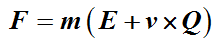
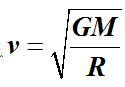
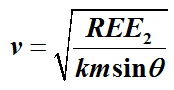
摘要: 时空阶梯理论揭示,物质(能量)变化产生能气场,而物质(星系)周围存在暗物质,所以,第一猜测暗物质就是能气场物质。通过对比研究,发现星体的运动变化除了受牛顿引力之外,还受能量场和气场的作用力: 。其中,F是能气场力,m是星体质量,E是能量场强度,v是星体的速度,Q是气感应强度。星体的运动速度是,从牛顿引力看, ,而从能气场力看, ,两等式中的速度与距离的关系正好相反。经过计算知道,在银河系,在小于4 kpc的区域,牛顿引力起着主导作用,但是,从4 kpc开始,能气场力导致的星体运动速度逐渐上升,到了8.5 kpc的时候,两个力导致的星体运动速度重合,之后牛顿引力导致的星体速度逐渐减小,而能气场力导致的星体速度逐渐增大。
Abstract: Space-time ladder theory reveals that the matter (energy) changes can generate Energy-Qi field, and dark matter is present in the vicinity of matter (galaxy). Therefore, the first speculation of dark matter is the Energy-Qi field. Through comparative study, we found that in addition to the Newtonian gravity, the movement of the stars is also affected by the energy field and the Qi field: , F is the force of Energy-Qi field, m is the mass of the stars, E is the energy field strength, v is the speed of the stars, and Q is the Qi induction. The moving speed of the stars is, from Newton force, , from energy Qi field force, , and the relationship between speed and distance in the two equations is just the opposite. After calculations we know that in the Milky Way, Newton force plays a dominant role in the area of less than 4 kpc. However, starting from 4 kpc, the velocity of the stars caused by the force of the energy Qi field gradually increases. At 8.5 kpc, the velocity of the stars caused by both force coincides, after which the velocity of the stars caused by Newton force gradually decreases, and the velocity of the stars caused by the energy Qi field force gradually increases.
文章引用:常炳功. 用能气场力解释星系自转曲线[J]. 现代物理, 2018, 8(3): 107-114. https://doi.org/10.12677/MP.2018.83013

参考文献

[1] Dark Matter. CERN Physics. 20 January 2012.
[2] Milgrom, M. (1983) A Modification of the Newtonian Dynamics as a Possible Alternative to the Hidden Mass Hypothesis. Astrophysical Journal, 270, 365-370. [Google Scholar] [CrossRef
[3] Zyga, L. (2011) Dark Matter May Be an Illusion Caused by the Quantum Vacuum. General Physics. August 11, 2011. https://phys.org/news/2011-08-dark-illusion-quantum-vacuum.html
[4] 常炳功. 能量与中医气的关系类似电与磁的关系[J]. 现代物理, 2018, 8(2), 27-34.
[5] 常炳功. 暗物质是能量场气场物质, 类似电场磁场物质[J]. 现代物理, 2018, 8(3), 65-73.
[6] McHutchon, A. (2013) Electromagnetism Laws and Equations. Michaelmas.
[7] Plakhotnyk, M. (2017) Kepler’s Laws. arXiv:1702.06537v2 [math.HO]
[8] Walker, M.G. and Peñarrubia, J. (2011) A Method for Measuring (Slopes of) the Mass Pro-files of Dwarf Spheroidal Galaxies. The Astrophysical Journal, 2011, arXiv:1108.2404v3 [astro-ph.CO] 7 Sep 2011. [Google Scholar] [CrossRef
[9] 常炳功. 时空阶梯理论的历史以及封顶问题[J]. 现代物理, 2016, 6(4), 136-147
[10] 赵君亮. 星系自转曲线之观测研究进展[J]. 天文学进展, 2013, 31(2). [Google Scholar] [CrossRef
[11] Mayall, N.U. (1958) Comparison of the Large-Scale Structure of the Galactic Systems with that of Other Stellar Systems. In Roman, N.G., Ed., IAU Symp. 5, 23.
[12] Burbidge, E.M., Burbidge, G.R. and Pren-dergast, K.H. (1960) Motions in Barred Spiral Galaxies. II. The Rotation of NGC 7479. The Astrophysical Journal, 132, 654. [Google Scholar] [CrossRef
[13] Burbidge, E.M., Burbidge, G.R. and Prendergast, K.H. (1960) Motions in Barred Spiral Galaxies. III. The Rotation and Approximate Mass of NGC 3504. The Astrophysical Journal, 132, 661. [Google Scholar] [CrossRef
[14] Burbidge, E.M., Burbidge, G.R. and Prendergast, K.H. (1962) Motions in Barred Spiral Galaxies. IV. A Further Study of the Nucleus of NGC 1365. The Astrophysical Journal, 136, 119. [Google Scholar] [CrossRef
[15] Burton, W.B. and Gordon, M.A. (1978) Carbon Monoxide in the Galaxy. III—The Overall Nature of Its Distribution in the Equatorial Plane. Astronomy and Astrophysics, 63, 7.
[16] Pence, W.D. (1981) A Photometric and Kinematic Study of the Barred Spiral Galaxy NGC 253. II—The Velocity Field. The Astrophysical Journal, 247, 473.
[17] Sofue1, Y. and Rubin, V. (2001) Rotation Curves of Spiral Galaxies. Annual Review of Astronomy and Astrophysics, 39, 137-174. [Google Scholar] [CrossRef